GTA 住宅擴建規劃:許可、時程與真實成本
誠實拆解多倫多與周邊 GTA 的住宅擴建實際成本 —— 許可、時程,以及承包商通常不會主動揭露的項目。
ℹ️ 本文章正文目前僅有英文版本。我們正在逐篇準備完整的中文翻譯 —— 如有疑問,歡迎透過聯絡頁面與我們溝通。
Every year, more GTA homeowners are choosing a home addition or extension rather than moving. The math increasingly favours it — land is expensive, moving is brutal, and most existing lots have unused vertical or rear potential. But home additions are also where we see the most sticker shock, because the quoted cost and the real cost are often miles apart. Here's the full picture.
The three main types of additions
- Rear additions — extending the back of the home to enlarge the kitchen, living area, or add a family room. Most common and usually the simplest from a permitting standpoint.
- Second-storey additions — adding a full level on top of a bungalow. The most dramatic change, but also the most structurally complex. Foundations often need reinforcement.
- Side additions (in-fill) — extending the footprint sideways on lots that allow it. Common in parts of North Toronto and Etobicoke, rare in tighter neighbourhoods.
Permits: what actually matters
In the GTA, nearly every addition needs a building permit. Depending on your zoning and how much footprint you're adding, you may also need:
- Committee of Adjustment approval — if your addition exceeds zoning limits (setbacks, floor area, height). Add 3–5 months to your timeline.
- Conservation authority sign-off — for properties near ravines or water. Common along the Humber and Don valleys.
- Heritage review — in designated areas like Cabbagetown, Yorkville, or Old Oakville.
A straightforward rear addition within zoning limits usually gets a permit in 6–10 weeks. Anything requiring variances is a 4–8 month wait.
Real cost ranges (2026 GTA)
These are ballpark figures based on what we're quoting right now — not 2019 numbers, not contractor-marketing numbers:
- Rear addition (200–400 sq ft): $175,000 – $350,000
- Second-storey addition (1,000+ sq ft): $450,000 – $850,000
- Full wrap-around addition with kitchen renovation: $650,000 – $1.2M+
These cover the full scope: design, drawings, permits, excavation, structural, full finishes, and reasonable allowances for fixtures. What they don't cover: high-end custom millwork, premium appliance packages, or ravine-lot engineering. Those can add 15–40% depending on scope.
Timelines that are actually achievable
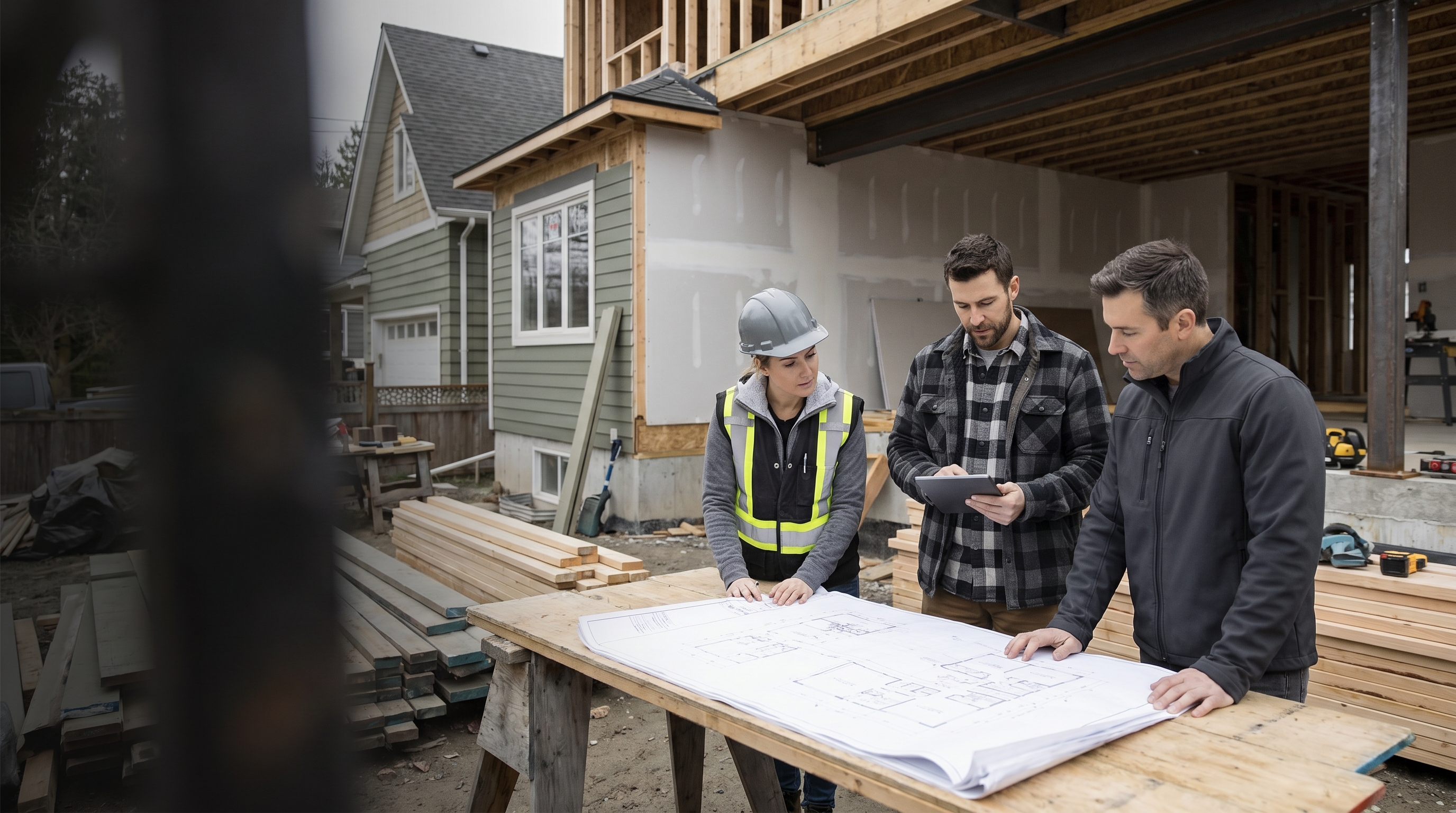
The phases most homeowners don't budget for are the ones before the shovel hits the ground:
- Design + drawings: 6–10 weeks
- Permits: 6 weeks (straightforward) to 6+ months (with variances)
- Construction: 16–28 weeks for a typical rear addition; 24–40 weeks for a second-storey
Realistically, plan for 9–12 months from first meeting to move-in for most additions. The crews who promise 4 months, all in are either cutting corners or stretching the truth.
The hidden costs that catch homeowners
A few line items we always flag early because they're not obvious from a basic quote:
- Temporary living arrangements during second-storey additions. Most families can't stay in the home.
- Mechanical upgrades — when you add 40% more square footage, your furnace, A/C, electrical panel, and hot water tank often all need to scale up.
- Exterior re-siding — matching new cladding to existing never looks right, so budget to re-clad the whole house in many cases.
- Municipal development charges — Toronto charges a development fee on additions over a certain size. Easy to miss.
When an addition is the right move
An addition makes sense when you love your neighbourhood, your lot has room to grow, and your total cost (including buy-sell friction on a move) comes out ahead of upgrading to a larger home. We'll happily run the numbers with you — sometimes we talk clients out of additions when the math doesn't work. That honesty is why our clients come back a decade later for the next project. For inspiration, see examples of our addition and extension projects in the GTA.
Home addition FAQs
How much does a home addition cost in the GTA in 2026?
Rear additions of 200–400 sq ft typically cost $175,000–$350,000 in the GTA. Second-storey additions of 1,000+ sq ft run $450,000–$850,000. Full wrap-around additions combined with a kitchen renovation usually fall between $650,000 and $1.2M+. These ranges include design, drawings, permits, and full finishes.
How long does a home addition take from start to finish?
Plan for 9–12 months end-to-end in the GTA: 6–10 weeks for design and drawings, 6 weeks to 6+ months for permits (variances add significant time), and 16–40 weeks of on-site construction depending on addition type. Second-storey additions are the longest; straightforward rear additions are the shortest.
Do I need a building permit for a home addition in Ontario?
Yes, nearly every addition in Toronto, Markham, Vaughan, Richmond Hill, and the rest of the GTA requires a building permit. If the addition exceeds zoning limits (setbacks, floor area, height), you will also need Committee of Adjustment approval, adding 3–5 months to the timeline.
Do I need to move out during a home addition?
It depends on the scope. Most rear additions can be built with the family still living in the home. Second-storey additions usually require temporary relocation during the roof-off and framing phase — typically 6–10 weeks. Full wrap-around additions almost always require the family to move out.
準備開始您的裝修?
Grand Craft Renovations specializes in custom renovations across Toronto, Richmond Hill, Markham, Vaughan, and the GTA. See our 住宅擴建與空間增建 services or request a free consultation — no obligation.